For people living with multiple sclerosis (MS) or neuromyelitis optica spectrum disorder (NMOSD), treatment often involves more than managing an acute relapse. Patients may also need long-term support for fatigue, weakness, numbness, pain, poor sleep, bladder symptoms and recovery between attacks.
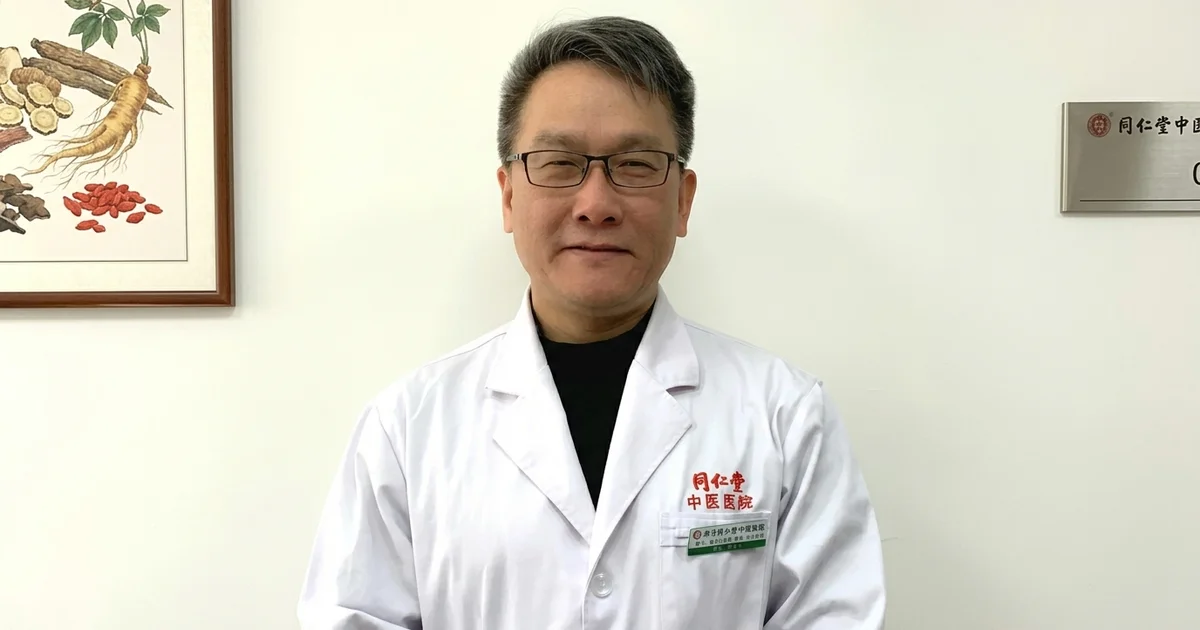
Some international patients are interested in combining standard neurological care with traditional Chinese medicine. Professor Yongping Fan is a Beijing specialist known for his clinical and academic work on integrative treatment for neurological and neuroimmunological conditions, particularly MS and NMOSD.
This guide explains Professor Fan’s Bushen Yisui approach, what the existing research does and does not show, and how overseas patients can prepare for an assessment in Beijing.
Who Is Professor Yongping Fan?
Professor Yongping Fan is a chief physician, professor and doctoral supervisor with extensive experience in the traditional Chinese medicine and integrative treatment of neurological disorders.
He previously led the Traditional Chinese Medicine Department at Beijing Tiantan Hospital, a major national centre for neurological care and research. His principal clinical interests include multiple sclerosis, neuromyelitis optica spectrum disorder, stroke, brain tumours, complications following neurosurgery and other complex neurological conditions.
Professor Fan is currently listed as a visiting specialist at Beijing Tongrentang Hospital of Traditional Chinese Medicine, where patients may be assessed for an individualized Chinese medicine or integrative treatment plan. His appointment schedule may change and should be confirmed before travel.
Important name distinction: Beijing Tongrentang Hospital of Traditional Chinese Medicine is not the same institution as Beijing Tongren Hospital. The two hospitals have similar English names but are separate medical institutions.
What Does “Bushen Yisui” Mean?
Bushen Yisui, written in Chinese as “补肾益髓”, is commonly translated as “tonifying the kidney and nourishing the marrow.” This terminology comes from traditional Chinese medicine and should not be interpreted as treatment for anatomical kidney disease.
Within traditional Chinese medicine, the concepts of “kidney” and “marrow” describe a broader functional system associated with constitutional strength, neurological function, growth, ageing and recovery. They are not identical to the kidneys, bone marrow or spinal cord as defined in modern medicine.
Professor Fan’s approach to MS and NMOSD has also incorporated treatment principles such as:
- Nourishing the liver and kidney according to traditional Chinese medicine pattern differentiation
- Supporting qi and constitutional strength
- Resolving phlegm and dampness
- Promoting blood circulation and addressing blood stasis
- Managing persistent symptoms during the remission or recovery stage
Bushen Yisui is therefore a treatment principle rather than one universal prescription for every patient. The exact herbs, doses and treatment duration may differ according to the diagnosis, disease stage, symptoms, constitution, current medication and safety considerations.
Which Conditions Has Professor Fan Studied?
Professor Fan’s published work and clinical experience have focused particularly on neuroimmunological and neurological conditions, including:
- Multiple sclerosis
- Neuromyelitis optica spectrum disorder
- Persistent neurological symptoms between relapses
- Neuropathic pain, numbness and weakness associated with neurological disease
- Recovery following neurological injury or neurosurgery
- Selected chronic neurological conditions requiring individualized integrative management
A consultation is still required to determine whether this approach is relevant to an individual patient. Having MS, NMOSD or another neurological diagnosis does not automatically mean that Bushen Yisui treatment will be recommended.
Bushen Yisui and Multiple Sclerosis
Multiple sclerosis is an immune-mediated condition affecting the brain and spinal cord. Standard neurological management may include disease-modifying therapy, treatment of acute relapses, rehabilitation, symptom control and regular clinical and MRI monitoring.
Professor Fan and his colleagues have studied the traditional Chinese medicine patterns seen in people with MS. Their work has described patterns involving the kidney, liver and spleen, together with factors such as qi deficiency, phlegm, dampness and blood stasis.
A 2024 integrative diagnosis and treatment proposal co-authored by Professor Fan reviewed both conventional and traditional Chinese medicine approaches to MS. It described treatment principles including nourishing the liver and kidney, warming and supporting the spleen and kidney, clearing phlegm and heat, and supporting qi while promoting blood circulation.
This work provides a structured framework for integrative practice, but it does not mean that one herbal formula is suitable for every MS patient.
Bushen Yisui and NMOSD
Neuromyelitis optica spectrum disorder is a separate neuroimmunological disease that frequently affects the optic nerves and spinal cord. Some patients experience severe visual loss, limb weakness, sensory disturbance, bladder dysfunction or repeated attacks.
Professor Fan’s clinical and academic work has included patients with NMOSD, particularly during the stable or remission stage. The proposed role of Chinese medicine is generally supportive and individualized, with attention to persistent symptoms, constitutional recovery and long-term management.
Chinese medicine should not delay urgent neurological treatment during a suspected acute attack. New visual loss, rapidly increasing weakness, difficulty walking, urinary retention, breathing difficulty or other sudden neurological symptoms require urgent local medical assessment.
What Does the Research Show?
Research related to Professor Fan’s Bushen Yisui approach includes clinical observations, traditional Chinese medicine syndrome studies, integrative treatment proposals and laboratory research using experimental autoimmune encephalomyelitis models.
Laboratory studies have investigated possible effects on inflammatory activity, neurotrophic factors and signalling pathways associated with axonal injury and repair. Examples include research involving BDNF and the Nogo-A/NgR/RhoA/ROCK pathway.
These findings are scientifically relevant, but most mechanistic studies were conducted in laboratory or animal models. They cannot by themselves prove that the treatment regenerates human myelin, reverses permanent neurological damage or prevents future attacks.
Current evidence should therefore be interpreted cautiously:
- There is research supporting further investigation of Bushen Yisui in neuroimmunological disease.
- Some clinical studies and observations have reported improvements in symptoms or relapse-related outcomes.
- The available evidence does not establish Bushen Yisui as a cure for MS or NMOSD.
- It should not replace disease-modifying therapy, immunotherapy or acute relapse treatment recommended by a neurologist.
- Larger and independently replicated clinical trials are still needed.
How Is the Treatment Used Alongside Neurological Care?
An integrative consultation should begin with confirmation of the neurological diagnosis and a review of the patient’s current treatment. The purpose is not to choose between Chinese medicine and modern neurology, but to determine whether an individualized complementary plan can be used safely alongside standard care.
Patients should not stop corticosteroids, immunosuppressants, monoclonal antibodies, MS disease-modifying treatments or other prescribed medicines without consulting the doctor responsible for their neurological care.
Professor Fan may review:
- The exact neurological diagnosis
- Whether the disease is active, relapsing or stable
- The number and severity of previous attacks
- Residual neurological symptoms
- Brain, optic nerve and spinal MRI findings
- AQP4-IgG and MOG-IgG antibody results
- Cerebrospinal fluid findings where available
- Current and previous neurological treatments
- Liver function, kidney function and other safety considerations
- The patient’s traditional Chinese medicine pattern
Who May Consider an Assessment?
An assessment may be considered by patients who:
- Have a confirmed diagnosis of MS or NMOSD
- Are currently in a relatively stable or remission stage
- Continue to experience fatigue, weakness, numbness, pain, sleep problems or other residual symptoms
- Want an integrative second opinion while continuing neurological care
- Are willing to provide complete medical records and medication information
- Understand that treatment results cannot be guaranteed
Patients who are pregnant, planning pregnancy, taking anticoagulants, receiving immunosuppressive therapy or living with liver or kidney disease must disclose this information before any herbal prescription is considered.
What Records Should International Patients Prepare?
Before requesting an appointment, international patients should prepare:
- A concise medical history and current diagnosis
- Hospital discharge summaries and previous specialist opinions
- Brain and spinal MRI reports
- Original MRI images in DICOM format where possible
- AQP4-IgG and MOG-IgG antibody results
- Lumbar puncture and cerebrospinal fluid results, including oligoclonal bands if tested
- A chronological list of relapses and treatments
- A complete list of current and previous medicines
- Recent complete blood count, liver function and kidney function results
- A description of the symptoms the patient most wants to address
English-language records can be organized into a concise Chinese medical summary before the appointment. This allows the specialist to understand the case more efficiently and reduces the risk that important information will be missed.
Do Patients Need to Travel to Beijing First?
International patients should normally complete an initial record review before booking flights. The review can help determine whether Professor Fan is an appropriate specialist, whether additional tests are required and whether an in-person consultation in Beijing is likely to be useful.
China MedPass can assist with medical record organization, Chinese translation, appointment coordination, local registration and interpretation during the consultation. Appointment availability must be confirmed individually and should not be assumed from an online schedule.
Frequently Asked Questions
Can Bushen Yisui cure multiple sclerosis?
No. There is currently no established cure for MS. Bushen Yisui is studied and used as part of individualized integrative care, not as a guaranteed cure.
Can the treatment regenerate damaged myelin?
Laboratory studies have investigated pathways associated with inflammation, axonal injury and repair. This does not prove that the treatment can regenerate myelin or reverse permanent neurological disability in humans.
Is Bushen Yisui the same prescription for every patient?
No. Chinese medicine treatment is normally adjusted according to symptoms, constitution, disease stage, medication history and pattern differentiation.
Can I stop my current neurological medication?
No medication should be stopped or changed without agreement from the neurologist responsible for your care. Chinese medicine should be coordinated with, rather than substituted for, appropriate neurological treatment.
Is the treatment only for people with kidney disease?
No. “Kidney” in the term Bushen refers to a traditional Chinese medicine concept and does not mean that the patient has anatomical kidney disease.
Where does Professor Fan currently see patients?
Professor Fan is currently listed at Beijing Tongrentang Hospital of Traditional Chinese Medicine. His current clinic schedule and availability should be confirmed before arranging travel.
Can China MedPass guarantee that Professor Fan will accept my case?
No. Suitability and appointment availability depend on the medical information provided, the specialist’s assessment and the current clinic schedule.
References and Further Reading
- Beijing Tongrentang Hospital of Traditional Chinese Medicine
- Professor Yongping Fan’s professional profile at Beijing Tiantan Hospital
- Diagnosis and treatment plan of integrated Chinese and Western medicine for multiple sclerosis
- Clinical characteristics and traditional Chinese medicine syndrome distribution in 261 patients with multiple sclerosis
- Experimental research on Bushen Yisui Formula and axonal regeneration-related signalling pathways
- Research on Bushen Yisui Capsule, BDNF and Nogo-A in an experimental autoimmune encephalomyelitis model
This article is for general educational and healthcare-navigation purposes. It does not provide a diagnosis, prescription or guarantee of treatment outcome. MS and NMOSD require assessment and monitoring by qualified neurological specialists. Patients should not delay urgent care or stop prescribed medication in order to pursue traditional Chinese medicine treatment.